20 EXCELLENT FACTS FOR PICKING COMPLIANCE SERVICES IN STAFFORD
Top 10 Tips For Evaluating The Qualifications Of PAT Technicians. in Stafford
The ability of the person conducting Portable Appliance Testing is the key factor in transforming a mechanical procedure into a legally valid system. In the UK, and specifically in the Electricity at Work Regulations, 1989, PAT testers are not required to have an official license or other legally valid qualification. Regulation 16 states that all persons possess "technical skills or experience" needed to stay clear of injury and danger. The principle of "competence" puts the entire responsibility on the dutyholder (employer) to choose and hire technicians who demonstrate a blend of formal training, hands-on expertise, and sound judgment. A marketplace of varying capabilities of technicians is a result of the absence of a certification that is mandatory. Dutyholders must therefore understand how to validate competency beyond a certification. A skilled technician is not only competent to conduct tests, but also understands the basic principles of safety in the electrical industry. They are able to analyze test results with accuracy and make informed decisions on passing or failing based on the IET Code of Practice.
1. The Definition of Competence under EAWR, 1989 in Stafford
Regulation 16 of Electricity at Work Regulations (1989) stipulates that everyone must have the required skills to avoid danger or injury. HSE defines competence in terms of "the capability of a person to complete a task without taking risks for themselves or anyone else." It is comprised of three elements that are required: electrical knowledge and experience in the field and a thorough understanding of the system. In order for a technician to be considered legally competent they must have all three of these components.
2. Qualifications in formal education and demonstrated competence in Stafford
The formal certificate isn't legally required, but it does provide the clearest evidence of your knowledge. The City & Guilds 2377 qualification ("In-service Inspection and Testing of Electrical Equipment") is the industry-recognised standard. The mere possession of this certificate does not guarantee the ability. Experience in the field is essential. A person who is required to be a duty holder should look for both a relevant qualification and evidence of practical experience. The technician would need to have extensive experience to prove their skills.
3. City & Guilds qualifications 2377 are described
City and Guilds is an IET Level 3 qualification. It assesses a person's ability to conduct tests, inspections and their knowledge of the IET Code of Practice. The qualification is split into two sections namely 237777 (theory multiple-choice test) as well as 237778(practical assessment). The full certification shows that the knowledge and abilities were independently assessed. If you'd like to verify the certification, request the City & Guilds certificate number. You can verify the validity of the certificate on their verification portal online.
4. It is essential to have hands-on practical Experience in Stafford
It is not worth much without being able to use it. A competent technician will have considerable hands-on experience testing different appliances in various environments. This allows them identify small flaws that a novice may miss. They're also better equipped to handle equipment that isn't standard and work efficiently in complicated conditions like industrial sites or construction sites. A dutyholder should ask an aspiring technician or provider about the tester's experiences and the kinds of Staffords they are working on to assess the value of their work background.
5. Experience with the IET Code of Practice For In-Service Inspection and Testing
The IET Code of Practice (Code of Practice) is the standard for all PAT testing. A qualified technician should not just have a copy of however, they should also have an understanding of its content. Knowing the classifications of equipment is vital as is the ability to perform visual inspection and test procedures as well as the proper use of testing instruments and the pass/fail results. Their ability to use and reference this guidance correctly will be the most important indicator of their professionalism.
6. Understanding and Calibration of Test Instruments
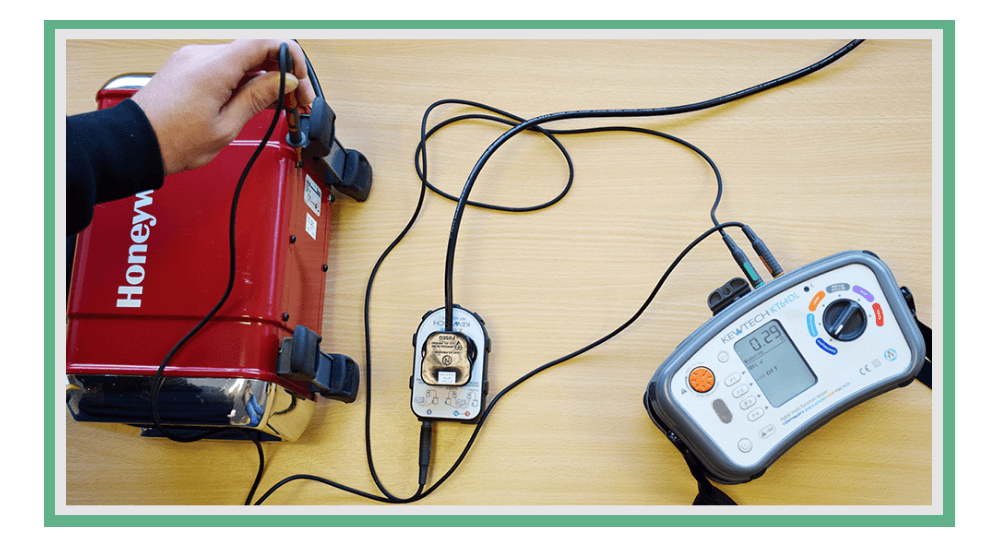
A skilled technician knows that their own test equipment is crucial for obtaining accurate results. It is essential that they be aware that the PAT test equipment needs to be calibrated by a reputable UKAS laboratory regularly (typically every year) to ensure precise readings. They should have a valid certificate of calibration for their equipment. In addition, they must know how to operate the device correctly, carry out a daily user check (e.g. an e.g., the lead test), and interpret the results it provides and not simply record numbers.
7. Capability to conduct meaningful inspections in Stafford
A thorough visual inspection can detect the majority of problems. This step is extremely important for technicians. The technician will thoroughly check all connectors, plugs and cables as well as casings looking for damage, wear signs or indications that they are exceeded their temperature. They know how to properly connect a plug, and also the correct fuse rating. They may ignore this step or rush through it by relying on an electronic tester. It's a major failure of duty.
8. Judgement and Decision-Making: Interpreting Results and applying Pass/Fail Criteria in Stafford
The tester's electronic system gives readings while the technician renders the judgment. The technician's ability to interpret the readings in relation to the IET Code of Practice and the appliance that demonstrates their proficiency. For instance, they must be able to determine when a slightly elevated resistance to insulation is ok and when a seemingly acceptable reading on earth continuity may indicate latent faults within a particular appliance. A professional with a degree is their ability to make decisions.
9. Problems with Liability and Insurance in Stafford
It is not mandatory, but a technician with the right skills must be covered by Public Liability Insurance. This is to protect the customer should the technician cause property damage during testing. Additionally, by hiring an electrician with demonstrated proficiency, the person in charge will be able to defend themselves in the court of "due care" and can prove that they have made every effort possible to hire the right person, which will be crucial in any investigation of an electrical issue that could be a cause for investigation.
10. Communication and Documentation Skills in Stafford
Testing that is not documented clear and accurate documentation is of no value. Technicians who are certified should create clear, legible asset registers and reports that accurately define the appliance, keep the results of tests and clearly state whether the appliance is passed or failed. They should also be able communicate effectively with the person in charge, explaining the findings of any defects, the associated risks, and the required actions (e.g. repair or replacement). Communication with the dutyholder is a crucial component of the safety system. See the recommended Stafford emergency light testing for site info including electrical fire, fire extinguisher company, fire electrical extinguisher, extinguisher fire extinguisher, fire extinguisher, electrical extinguisher, extinguisher inspections, fire extinguisher fire, electrical extinguisher, fire extinguisher servicing and more..
Top 10 Tips To Be Certified And Qualified For Services For Fire Extinguisher Services in Stafford
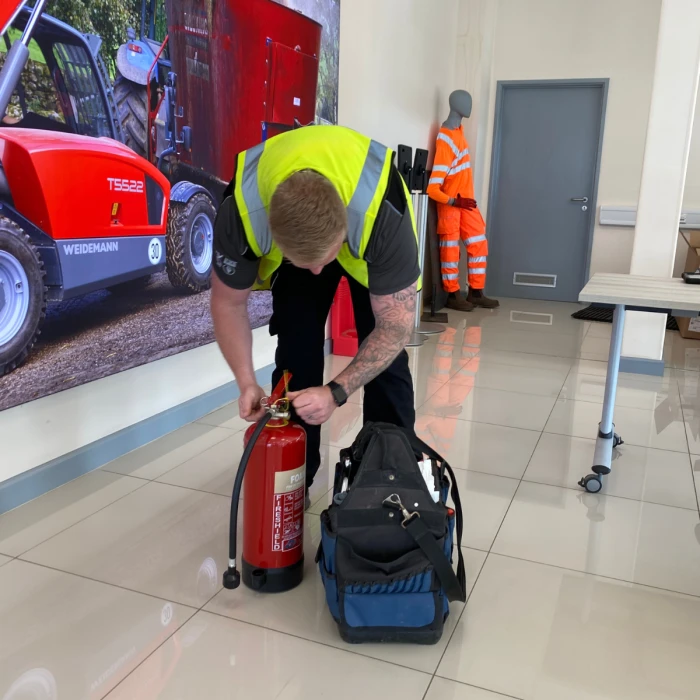
In the UK, there is a strict framework for the provision of fire extinguisher services. It seeks to ensure safety, competence and conformity. The "Responsible person" (under the Regulatory Reform (Fire Safety) Order, 2005) is accountable for identifying a competent service provider. Understanding the differences between certificates and qualifications is therefore not only technical, but is also a vital aspect of due diligence. Since the market is saturated with numerous service providers, ranging from highly accredited companies to individual operators it's important to understand what certifications mean and their value. When selecting a technician or a company that doesn't have the correct credentials, you can make your insurance invalid and fail to meet any legal obligations. In addition, it could put the premises and their occupants vulnerable. This guide outlines the 10 most important certificates and qualifications you should look for when choosing the right partner for your fire security.
1. The Gold Standard – Third-Party Certification Accredited by UKAS (BAFE SP101).
The BAFE SP101 certification is by far the most crucial. BAFE (British Approvals for Fire Equipment) is a independent registration body. SP101 is the sole scheme that is specifically designed for portable extinguishers. Importantly, the scheme is recognized by UKAS (The United Kingdom Accreditation Service) which is the nation's only accreditation agency. This means the scheme has been rigorously evaluated against international standards. The BAFESP101 certification issued by the UKAS is the strongest evidence possible of the competence of a business. It demonstrates that a company's personnel and their work procedures and equipment are regularly examined to ensure compliance to British Standards.
2. The Alternative Benchmark – FIRAS Certification
FIRAS which is also known as the Fire Industry Association Recognition and Accreditation Scheme (FIA), is another UKAS certified certification scheme. It's operated by Fire Industry Association (FIA). It's an exact match to BAFE SP101 when it comes to its quality and credibility. FIRAS certification offers the same assurance of the company's conformity to all relevant standards including BS 5306-3. If you are a responsible individual, a company holding the BAFE SP101 or FIRAS certification is a legitimate and reliable option. The UKAS certification of the scheme is what matters.
3. The Foundation is compliant with BS5306-3 in Stafford
Every qualification or certification is ultimately about proving adherence with the British Standard BS 5306-3 (2017). This code of conduct is the only definitive guideline for fire extinguisher servicing. The code of practice must be adhered to by qualified technicians. It defines the requirements for regular inspections every month, the basic annual maintenance, longer-term 5-year services for extinguishers made from powder, water, or foam, and an overhaul every 10 years for CO2 units. Certifications such as BAFE and FIRAS exist to verify and verify this compliance. Ask a business how they adhere to this standard when evaluating their work.
4. Individual Technician Competence A: The FIA Units of Competence
Individual technicians perform the work. The most recognised individual qualifications are the FIA Units of Competence. They are evaluated against National Occupational Standards. The key components are:
FIA Module 001: Portable Fire Extinguishers Maintenance (Core Module)
FIA unit 010: Inspection of Portable Fire Extinguishers.
A skilled technician must hold at a minimum FIA Unit 011. Technicians who offer extended services (e.g. five-year discharges) should also have Unit 010. Ask potential providers about their technician's specific credentials.
5. The Role of Trade Associations in Stafford
Membership of a trade association such as the FIA or BAFE is not the same thing as being certified. These bodies may be members of a business without certifying them to their specific technical standards. Membership shows a willingness to be part of the professional community and access best practices guidelines, however it's not a proof of competence on its own. Find certifications that are specifically designed for the particular scheme (e.g. BAFE SP101), rather than general logos for membership.
6. Insurance: Public Liability, Professional Indemnity in Stafford
Any trustworthy service company will insist on having adequate insurance. Public Liability Insurance is required (e.g. PS5m+), to cover accidental damage caused to your home. Professional Indemnity Insurance can also be essential, since it will pay to rectify any errors made in their work or advice. This insurance is a prerequisite of certification. Always ask for proof of insurance prior to using the services of any certified company.
7. Manufacturer-Specific Training
Although the BS 5306-3 can be applied to all situations however, each manufacturer has distinct valve models, valve mechanisms, and recharge procedures. A highly qualified technician will often undergo manufacturer-specific training. This is crucial, particularly when it comes to more intricate or uncommon extinguisher models like dry or wet chemical systems or cleaner agents. The additional training will ensure that the technician can service all equipment on your premises correctly and safely, without voiding any manufacturer warranty.
8. How do you keep certification going through the process of auditing in Stafford
It is essential to realize that certifications aren't one-time award. BAFE and FIRAS Certified businesses are inspected annually by accredited auditors. Audits are conducted without notice, and consist of the review of documentation, interviewing technicians and observing work on site. The continuous examination by an outsider gives these certificates credibility, as they are not just an individual assessment.
9. The "Competent Person", vs. "Skilled Person".
There is an important legal distinction. The Fire Safety Order stipulates that only an "competent individual" is allowed to maintain the equipment. Case law suggests this means someone with the right training, experience, knowledge, and other qualities to enable them to properly implement the required measures. A "skilled person" (or skilled tradesperson) has the physical abilities to complete a task. A certified fire extinguisher technician has to have both the ability to complete the task, and also the necessary knowledge to understand the regulations standards, regulations, and dangers that are involved.
10. Due Diligence: Verifying Certificates or Claims and Other Documents
Responsibility for the verification of qualifications lies with the Responsible person. It's not enough to display an image in the van or site.
Verify Online. Verify Online. BAFE as well as the FIA both have online directories which allow you to look up a company's name and confirm the status of its certification. in Stafford
Ask for Certificates. A reliable business will be more than willing to send copies of FIRAS or BAFESP101 certificates or insurance documents, evidence of their technicians' FIA certifications, etc. in Stafford
Verify the expiry dates. Make sure that all certificates and policies are up to date and have the most current date. in Stafford
This verification process is your key defence against unqualified providers and is an essential part of proving your due diligence. View the most popular Stafford fire extinguisher maintenance for more examples including electrical fire, all about fire extinguisher, fire and extinguisher, fire extinguisher inspections, fire extinguisher testing, extinguisher company, extinguisher inspections, fire electrical extinguisher, extinguisher testing, electrical fire extinguisher and more. More broadly, have a look at the recommended fire extinguisher maintenance for more.